


Algebra Seminars
Seminars are held in 354 Parker Hall on Tuesdays at 2:30pm.
Feb 02, 2026 02:30 PM
354 Parker Hall
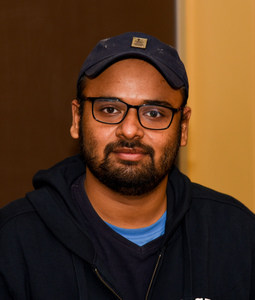
Speaker: Anirban Bhaduri (University of South Carolina)
Title: Orlov Spectrum for Weighted Projective Line
Abstract: One way to measure the complexity of a triangulated category is through its Orlov spectrum, defined as the set of all possible generation times of strong generators. There are very few cases where the Orlov spectrum has been explicitly computed; one example is the bounded derived category of coherent sheaves on the projective line over a field. In this talk, we discuss explicit generation times for certain strong generators and establish bounds for others, thereby fully determining the Orlov spectrum of the weighted projective line of type (2) over a field. We also explore possible generalization to the case of weighted Projective line of type (n).
This talk is based on a joint work with Matthew Ballard.
DMS Algebra Seminar
Jan 27, 2026 02:30 PM
354 Parker Hall
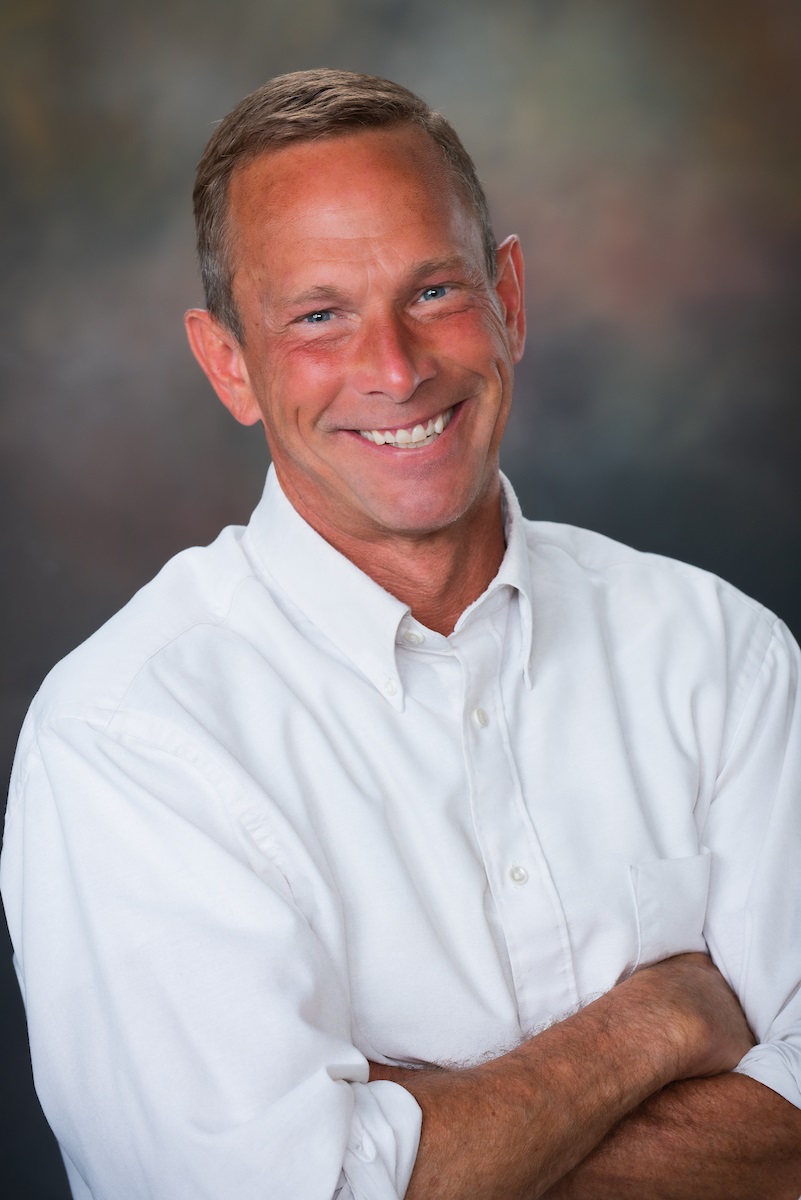
Speaker: Hal Schenck (Auburn)
Title: Chow rings in toric geometry
Abstract: We discuss an intersection theory computation in toric geometry that exhibits why exponential formulas appear in algebraic geometry.
DMS Algebra Seminar
Jan 20, 2026 02:30 PM
354 Parker Hall
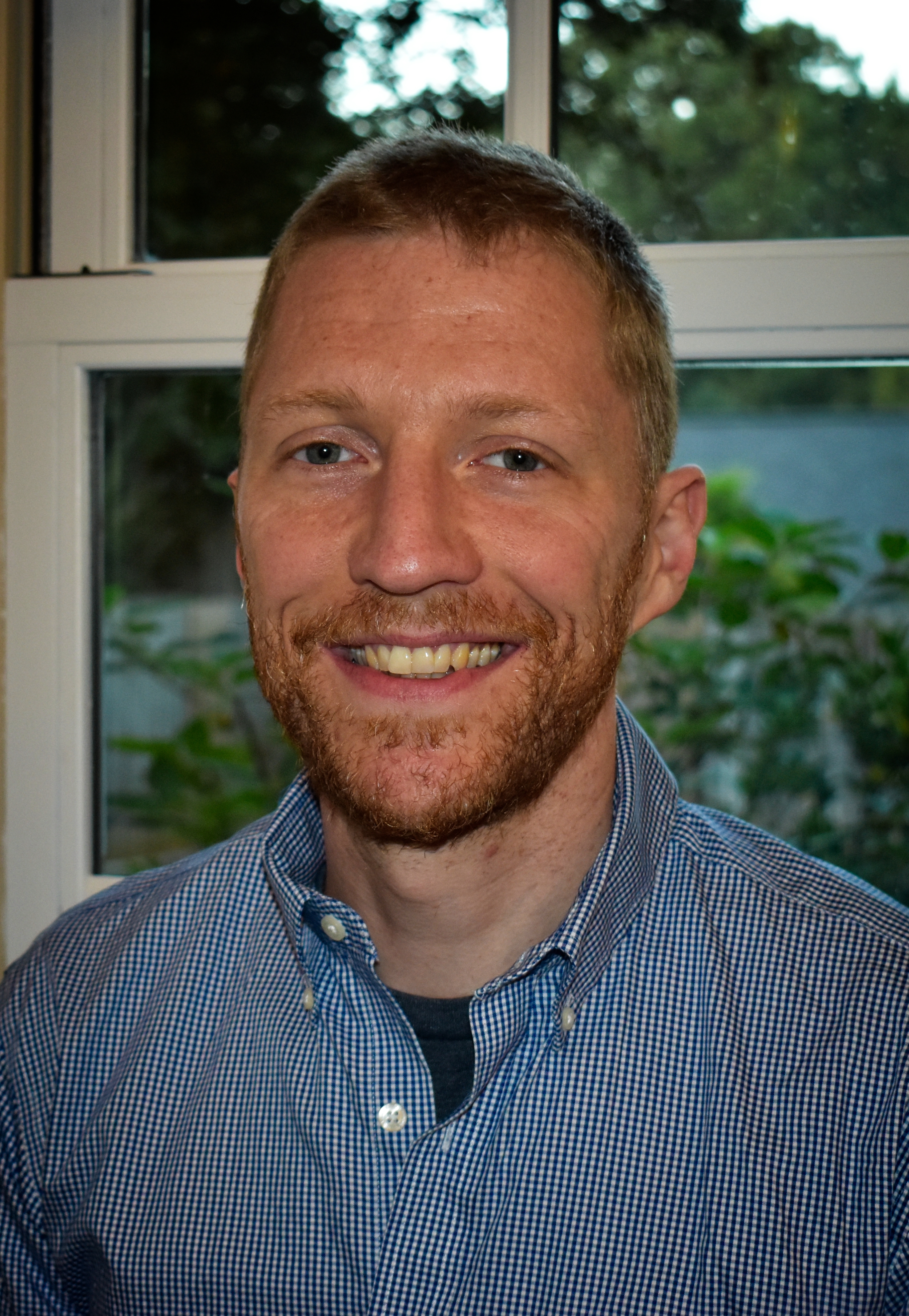
Speaker: Michael Brown (Auburn)
Title: The BGG correspondence for toric varieties (part 2)
Abstract: This is a continuation of last week’s talk.
DMS Algebra Seminar
Jan 13, 2026 02:30 PM
354 Parker Hall
Speaker: Michael Brown (Auburn University)
Title: The BGG correspondence for toric varieties
Abstract: The Bernstein-Gel'fand-Gel'fand (BGG) correspondence gives an equivalence between the derived category of projective space and the singularity category of an exterior algebra. Recent work of mine with Daniel Erman ("Tate resolutions on toric varieties") suggested what a generalization of this theorem for toric varieties might look like. I will talk about ongoing work toward proving such a generalization.
DMS Algebra Seminar
Dec 02, 2025 02:30 PM
354 Parker Hall
Speaker: Saeed Nasseh (Georgia Southern University)
Title: Connections and lifting theory of DG modules
Abstract: Lifting theory was studied by Auslander, Ding, and Solberg for modules and by Yoshino for complexes. Further progress on this theory has been made recently (in the works of Nasseh, Ono, Sather-Wagstaff, and Yoshino) in the context of differential graded (DG) homological algebra in order to obtain a clearer insight on some major problems in commutative algebra. On the other hand, the notion of connections originates from Riemannian geometry and its history goes back to the nineteenth century in the work of Christoffel. It has been studied since then by several mathematicians and physicists including Alain Connes who generalized it to the context of noncommutative differential geometry. In this talk, I will survey recent developments on the lifting theory of DG modules and describe a relationship between this theory and a DG version of the notion of connections.
This is an in-progress joint work with Maiko Ono and Yuji Yoshino.
DMS Algebra Seminar
Nov 18, 2025 02:30 PM
354 Parker Hall
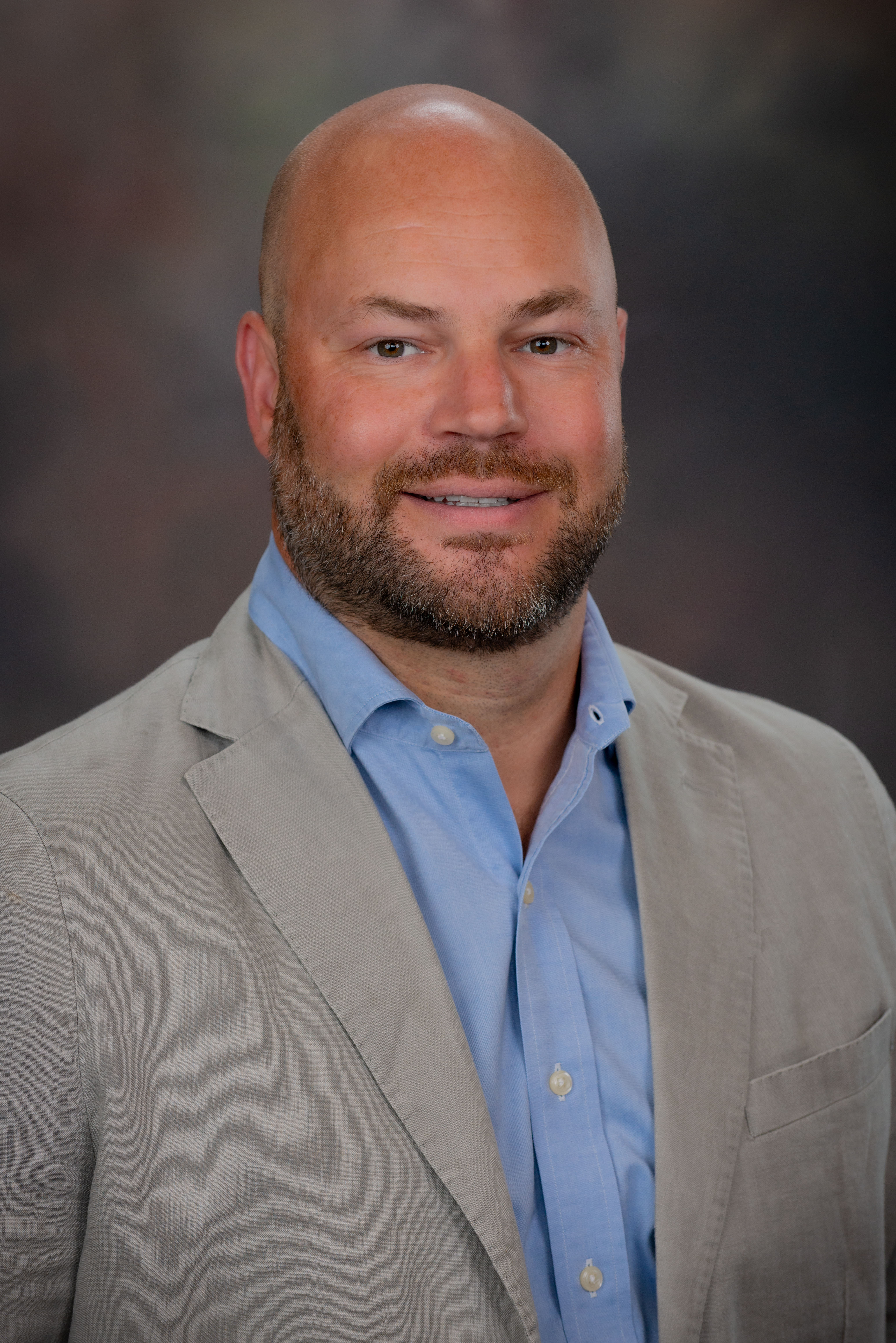
Speaker: Luke Oeding (Auburn University)
Title: What we know and don’t about the invariant ring for 5 qubits
Abstract: Invariant rings for spaces of tensors are particularly nice: they are finitely generated, and Cohen-Macaulay, and in the tame cases (the set of orbits depending on finitely many parameters) they are even polynomial rings. We can compute their Hilbert series via computations with finite groups. But what if we want to do computations with invariants? Schur-Weyl duality and Young symmetrizers provide a way to access and evaluate these functions at least in low degrees. The first case of qubits with wild orbit type is with 5 qubits. I will discuss our attempt to compute a set of primary invariants in this case, and I will explain why this result is almost surely correct, yet we cannot prove it.
DMS Algebra Seminar
Nov 11, 2025 02:30 PM
354 Parker Hall
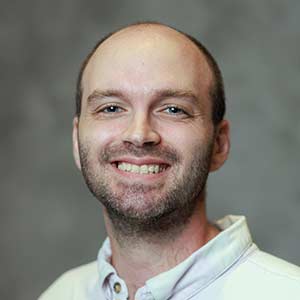
Speaker: Michael Perlman (University of Alabama)
Title: Higher singularities for determinantal ideals
Abstract: Higher Du Bois and higher rational singularities are newly-defined properties of complete intersections that can be detected using local cohomology, refining the classical notions of Du Bois and rational singularities. We will discuss the commutative algebra behind these properties, and a number of challenges that arise while attempting to generalize them outside the complete intersection case. Via the example of determinantal ideals, we will describe multiple possible generalizations.
DMS Algebra Seminar
Nov 04, 2025 02:30 PM
354 Parker Hall
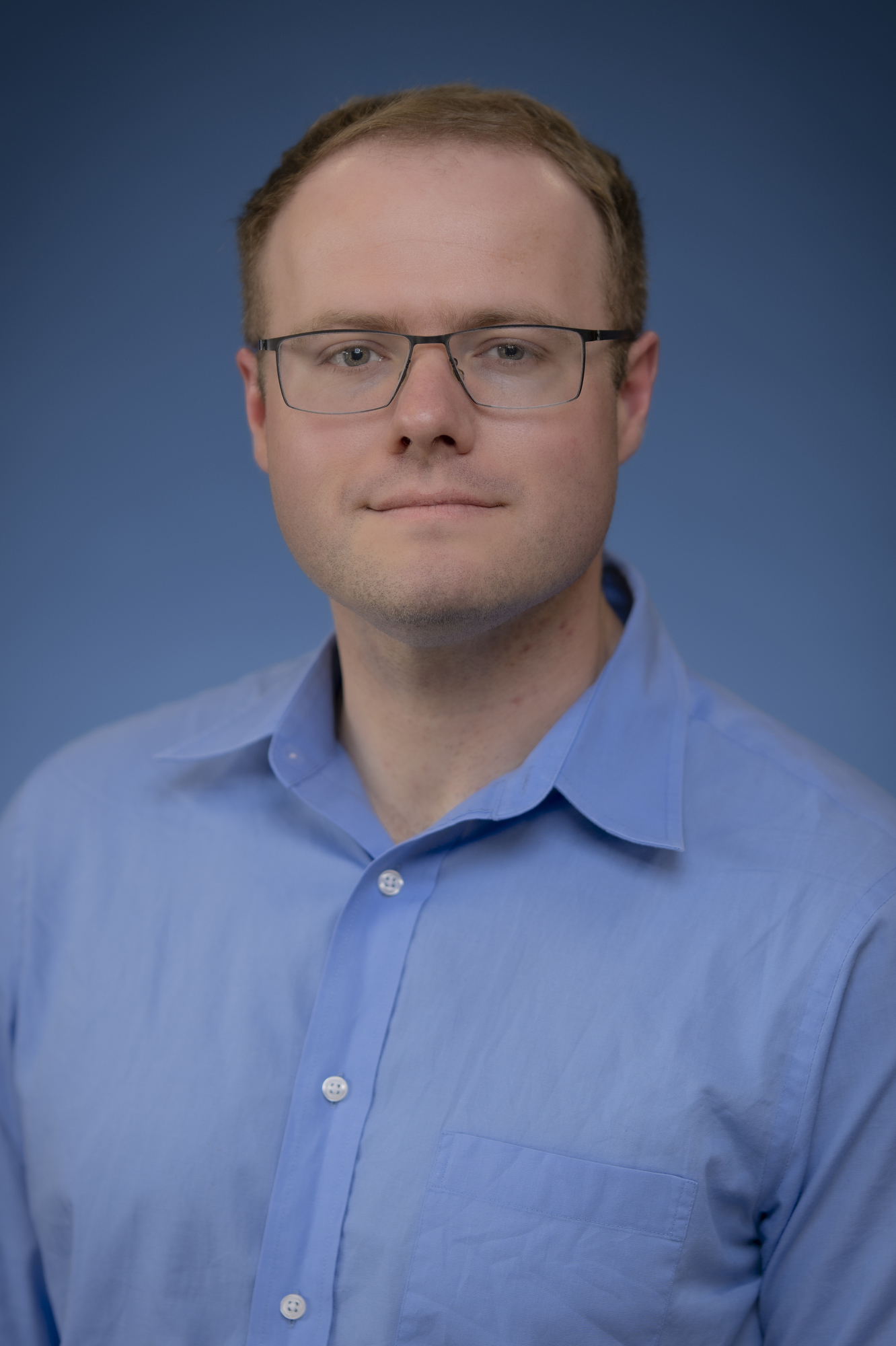
Speaker: Justin Lyle (Auburn)
Title: Vanishing of Tor and Depth of Tensor Products
Abstract: Let \(R\) be a commutative Noetherian local ring and let \(M,N\) be finitely generated \(R\)-modules. A classical problem is to calculate the depth of the tensor product of \(M\) and \(N\). This turns out to be extremely difficult to do, even under very stringent hypotheses. In this talk, we will discuss some classical work of Auslander, Huneke-Wiegand, Iyengar, and others on this problem, before moving on to discuss recent works of the speaker giving characterizations for rings over which depth of tensor products always behaves "nicely."
This talk is based primarily on joint work with Kaito Kimura and Andrew Soto Levins.
DMS Algebra Seminar
Oct 28, 2025 02:30 PM
354 Parker Hall
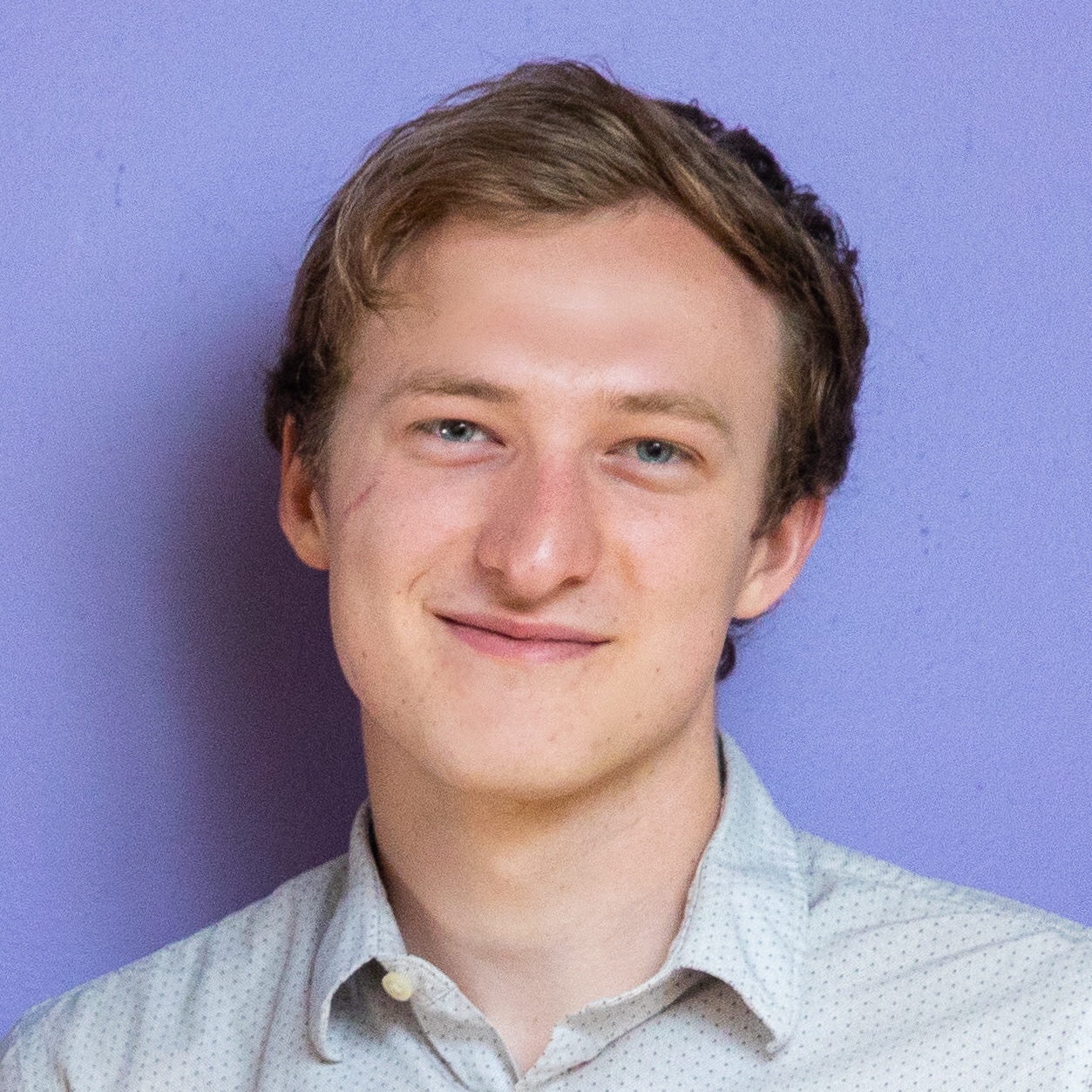
Speaker: John Cobb (Auburn)
Title: Solid State Physics and Algebraic Geometry
Abstract: I will describe how a version of spectral graph theory serves as a “tight-binding” model describing electron dynamics in crystalline solids, such as those found in nano-materials and topological insulators. This model turns out to be entirely algebraic and allows one to prove facts about the approximate electronic properties of materials using algebraic geometry and, more generally, interact with a larger world of spectral theory and periodic operators. I’ll spend some time developing this dictionary with lots of pictures, and then I will describe upcoming joint work with Matthew Faust and Andreas Kretschmer using some ideas from deformation theory to completely determine when a periodic discrete potential can be isospectral to the trivial potential.
DMS Algebra Seminar
Oct 21, 2025 02:30 PM
354 Parker Hall
Speaker: Hal Schenck (Auburn University)
Title: The Likelihood Correspondence
Abstract: An arrangement of hypersurfaces in projective space is strict normal crossing (SNC) if and only if its Euler discriminant is nonzero. We study the critical loci of arbitrary Laurent monomials in the equations of the smooth hypersurfaces. The family of these loci forms an irreducible variety in the product of two projective spaces, known in algebraic statistics as the likelihood correspondence and in particle physics as the scattering correspondence. We establish an explicit determinantal representation for the minimal generators of the bihomogeneous prime ideal that defines this variety.