DMS Applied and Computational Mathematics Seminar
Feb 20, 2026 02:00 PM
328 Parker Hall
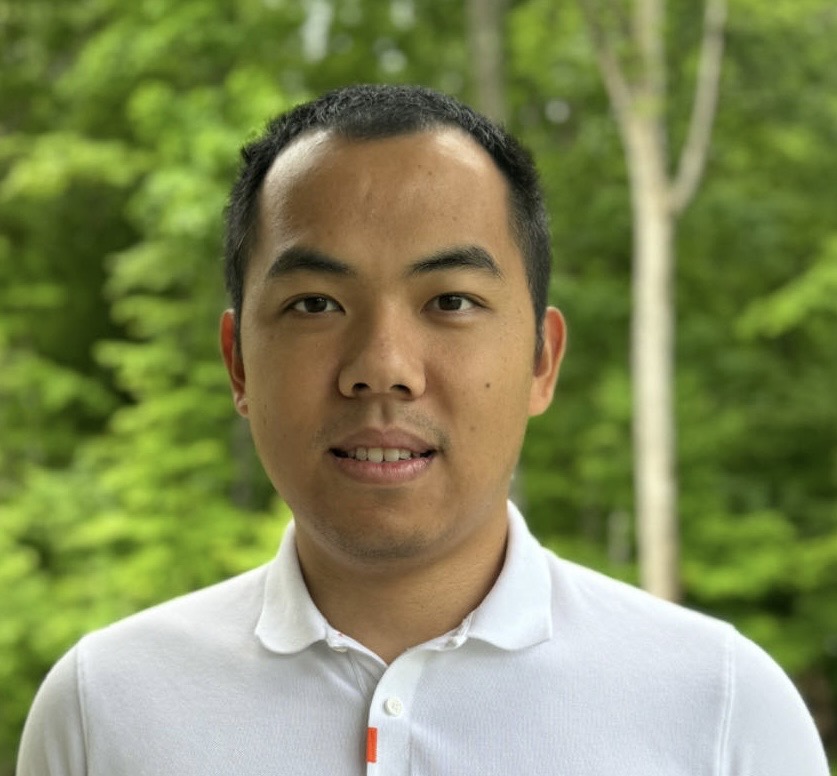
Speaker: Yuming Paul Zhang (Auburn University)
Title: Discretization error from regularized Reinforcement Learning to continuous-time stochastic control
Abstract: While reinforcement learning (RL) typically employs discrete-time Markov Decision Processes (MDPs), its connection to continuous-time optimal control remains a significant theoretical challenge. This work bridges this gap by investigating a class of relaxed control problems with uncontrolled diffusion coefficients. We establish explicit convergence rates for optimal feedback controls across discrete, continuous, relaxed, and classical regimes. If time permits, I will also discuss the convergence properties of the policy iteration algorithm within this framework. These findings provide a rigorous theoretical foundation for implementing RL in stochastic, continuous-time environments.
DMS Applied and Computational Mathematics Seminar
Feb 06, 2026 02:00 PM
328 Parker Hall
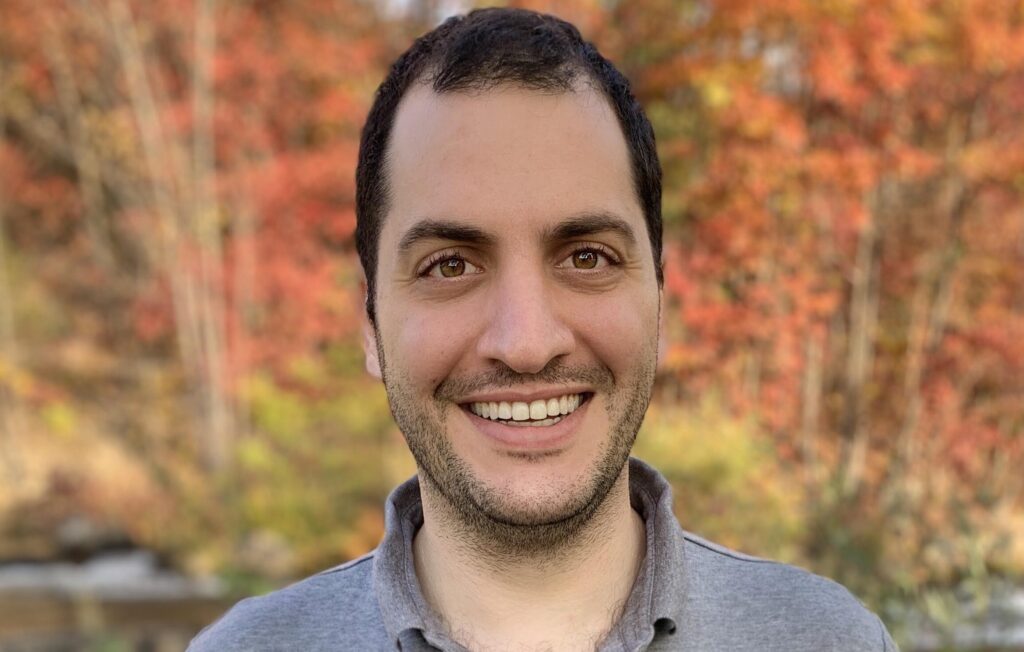
Speaker: Wei Li (DePaul University)
Title: Edge States on Sharply Joined Photonic Crystals
Abstract: Edge states are important in stably transmitting information and energy. We investigate edge states in full PDE models of photonic crystals with sharp interfaces, which are more realistic and controllable for manufacturing optical devices. First, we show the existence of Dirac points on honeycomb structures with suitable symmetries. Then we show that when perturbed in two appropriate ways, the perturbed honeycomb structures have a common band gap, and when joined along suitable interfaces, there exist edge states which propagate along the interfaces and exponentially decay away from the interfaces. Our rigorous analysis confirms the heuristic effective theory results. The main tools used are layer potentials, asymptotic analysis, the Gohberg-Sigal theory and Lyapunov-Schmidt reductions.
This is joint work with Junshan Lin, Jiayu Qiu, Hai Zhang.
Host: Junshan Lin
DMS Applied and Computational Mathematics Seminar
Nov 21, 2025 02:00 PM
328 Parker Hall
Title: IEnSF: Iterative Ensemble Score Filter for Reducing Error in Posterior Score Estimation in Nonlinear Data Assimilation
Abstract: The Ensemble Score Filter (EnSF) has emerged as a promising approach to leverage score-based diffusion models for solving high-dimensional and nonlinear data assimilation problems. While initial applications of EnSF to the Lorenz-96 model and the quasi-geostrophic system showed potential, the current method employs a heuristic weighted sum to combine the prior and the likelihood score functions. This introduces a structural error into the estimation of the posterior score function in the nonlinear setting. This work addresses this challenge by developing an iterative ensemble score filter (IEnSF) that applies an iterative algorithm as an outer loop around the reverse-time stochastic differential equation solver. When the state dynamics or the observation operator is nonlinear, the iterative algorithm can gradually reduce the posterior score estimation error by improving the accuracy of approximating the conditional expectation of the likelihood score function. The number of iterations required depends on the distance between the prior and posterior distributions and the nonlinearity of the observation operator. Numerical experiments demonstrate that the IEnSF algorithm substantially reduces the error in posterior score estimation in the nonlinear setting and thus improves the accuracy of tracking high-dimensional dynamical systems.
Host: Yuming Paul Zhang
DMS Applied and Computational Mathematics Seminar
Nov 14, 2025 02:00 PM
328 Parker Hall
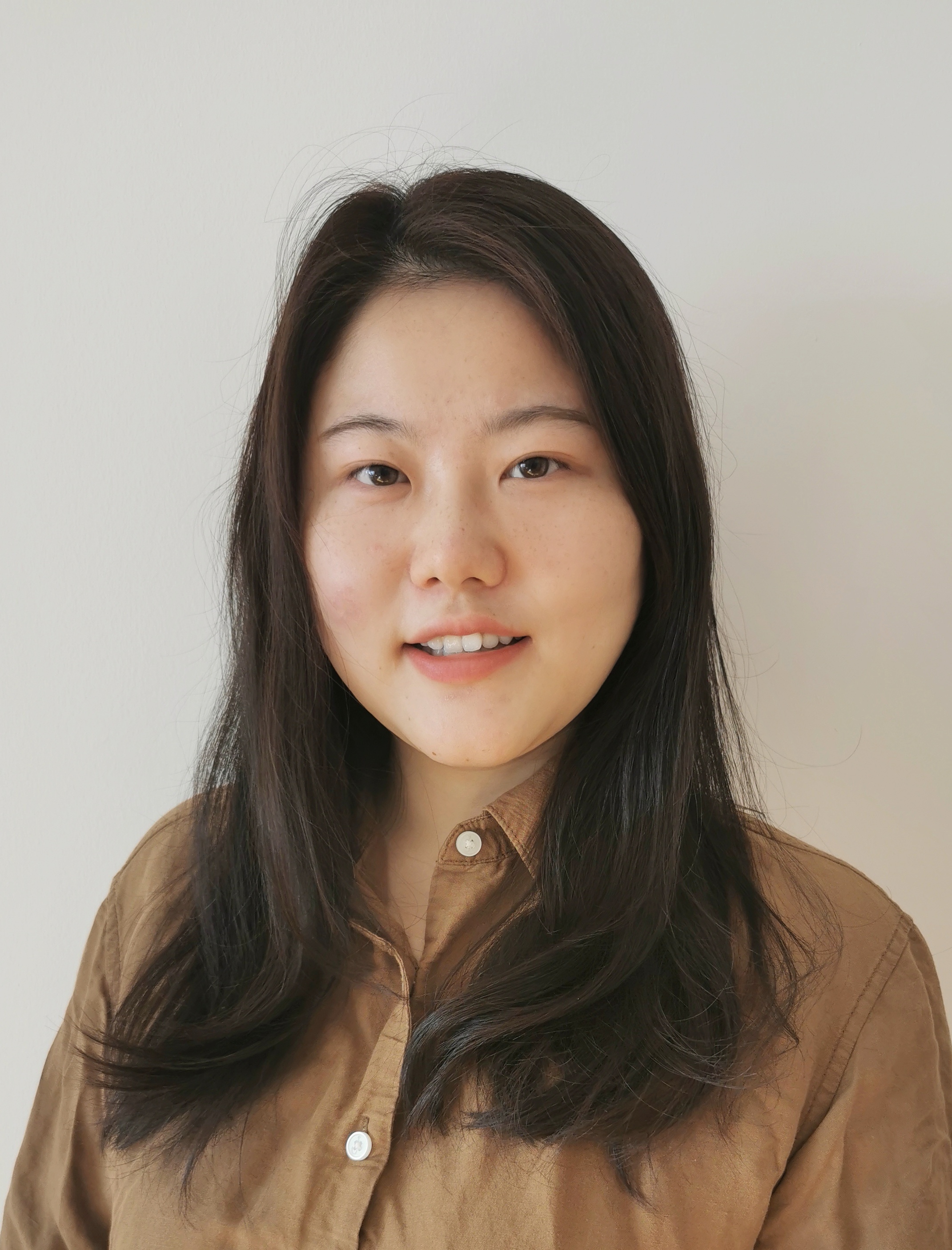
Speaker: Shanyin Tong (Univerity of Pennsylvania)
Title: A policy iteration method for inverse mean field games
Abstract: Mean-field games (MFGs) model non-cooperative games among large populations of agents and are widely applied in areas such as traffic flow, finance, and epidemic control. Inverse mean-field games address the challenge of inferring environmental factors from observed agent behavior. The coupled forward-backward structure of MFG equations makes solving these problems difficult and adds even greater complexity to their inverse problems. In this talk, I will introduce a policy iteration method for solving inverse MFGs. This method simplifies the problem by decoupling it into solving linear PDEs and linear inverse problems, leading to significant computational efficiency. The approach is flexible, accommodating a variety of numerical methods and machine learning tools. I will also present theoretical results that guarantee the convergence of our proposed method, along with numerical examples demonstrating its accuracy and efficiency.
Host: Yimin Zhong
DMS Applied and Computational Mathematics Seminar
Nov 07, 2025 02:00 PM
328 Parker Hall
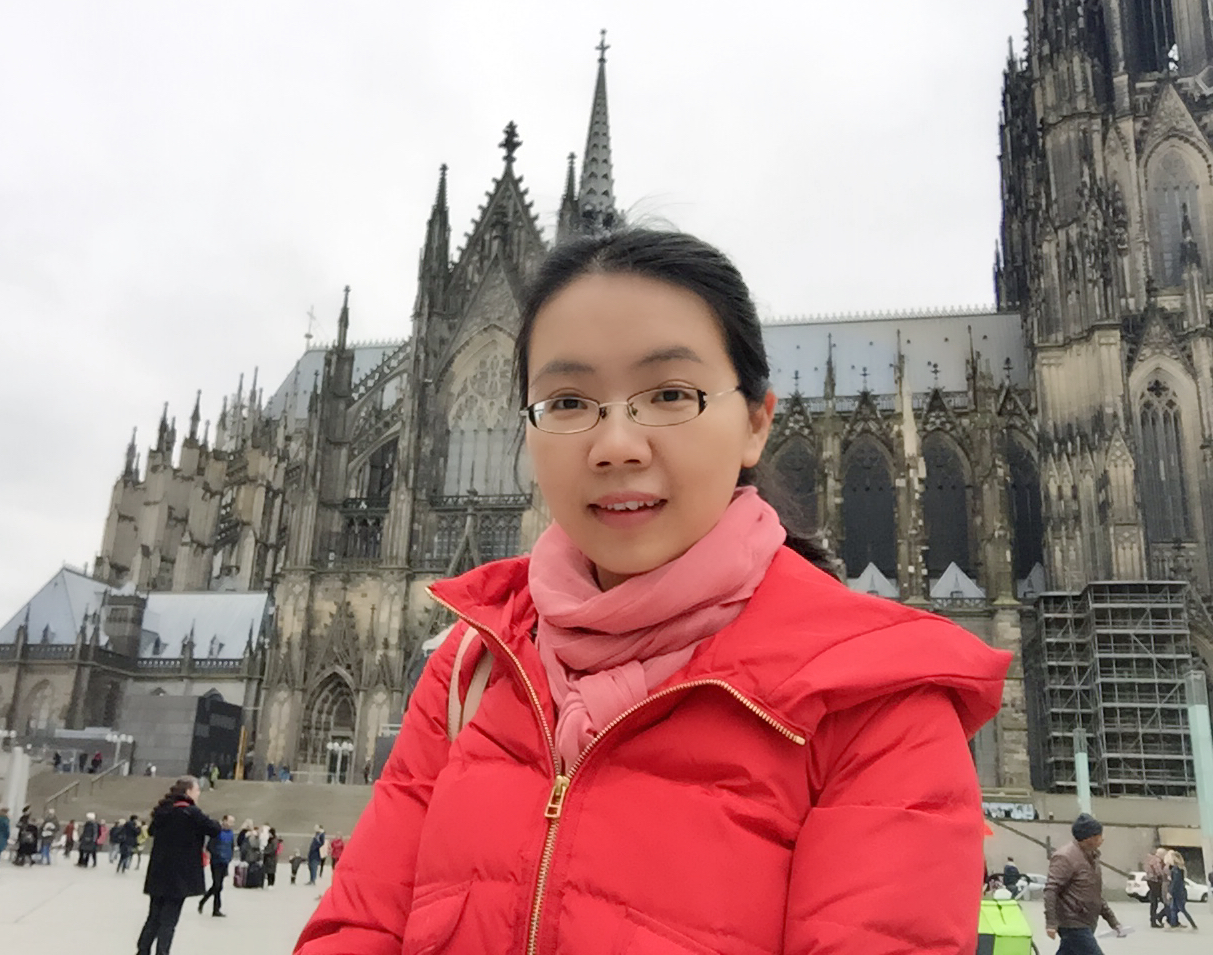
Speaker: Amir Sagiv (New Jersey Institute of Technology (NJIT))
Title: Floquet Hamiltonians - Spectrum and Dynamics
Abstract: The last couple of decades witnessed tremendous experimental progress in the study of "Floquet media," crystalline materials whose properties are changed by applying a time-periodic parametric forcing. The theory of Floquet media has so far been restricted to discrete models, which are often heuristic and approximate. Understanding these materials from their underlying PDE models, such as the Schrödinger equation, remains an open problem.
Specifically, semi-metals such as graphene are known to transform into "Floquet Insulators" under such periodic driving. While traditionally this phenomenon is modeled by a spectral gap, in PDE models no such gaps are conjectured to form. How do we reconcile these seemingly contradictory statements? We prove the existence of an “effective gap” – a novel and physically-relevant notion which generalizes a (proper) spectral gap. Adopting a broader perspective, we will then survey newer results on dispersion and spectral near-invariance in bulk Floquet materials.
Host: Junshan Lin
DMS Applied and Computational Mathematics Seminar
Oct 17, 2025 02:00 PM
328 Parker Hall
Speaker: James Scott (Auburn University)
Title: Nonlocal Boundary Value Problems with Local Boundary Conditions
Abstract: We state and analyze nonlocal problems with classically-defined, local boundary conditions. The model takes its horizon parameter to be spatially dependent, vanishing near the boundary of the domain. We establish a Green's identity for the nonlocal operator that recovers the classical boundary integral, which permits the use of variational techniques. Using this, we show the existence of weak solutions, as well as their variational convergence to classical counterparts as the bulk horizon parameter uniformly converges to zero. In certain circumstances, global regularity of solutions can be established, resulting in improved modes and rates of variational convergence. Generalizations of these results pertaining to models in continuum mechanics and Laplacian learning will also be presented.
Host: Yuming Paul Zhang
DMS Applied and Computational Mathematics Seminar
Sep 26, 2025 02:00 PM
328 Parker Hall

Speaker: Wuchen Li (University of South Carolina)
Title: Information Gamma Calculus: Convexity Analysis for Stochastic Differential Equations
Abstract: We study the Lyapunov convergence analysis for degenerate and non-reversible stochastic differential equations (SDEs). We apply the Lyapunov method to the Fokker–Planck equation, in which the Lyapunov functional is chosen as a weighted relative Fisher information functional. We derive a structure condition and formulate the Lyapunov constant explicitly. Given the positive Lyapunov constant, we prove the exponential convergence result for the probability density function towards its invariant distribution in the L1 norm. Several examples are presented: underdamped Langevin dynamics with variable diffusion matrices, quantum SDEs in Lie groups (Heisenberg group, displacement group, and Martinet sub-Riemannian structure), three oscillator chain models with nearest-neighbor couplings, and underdamped mean field Langevin dynamics (weakly self-consistent Vlasov–Fokker–Planck equations). If time is allowable, some extensions will be discussed on the time-inhomogeneous SDEs.
Host: Yanzhao Cao
DMS Applied and Computational Mathematics Seminar
Sep 19, 2025 02:00 PM
328 Parker Hall
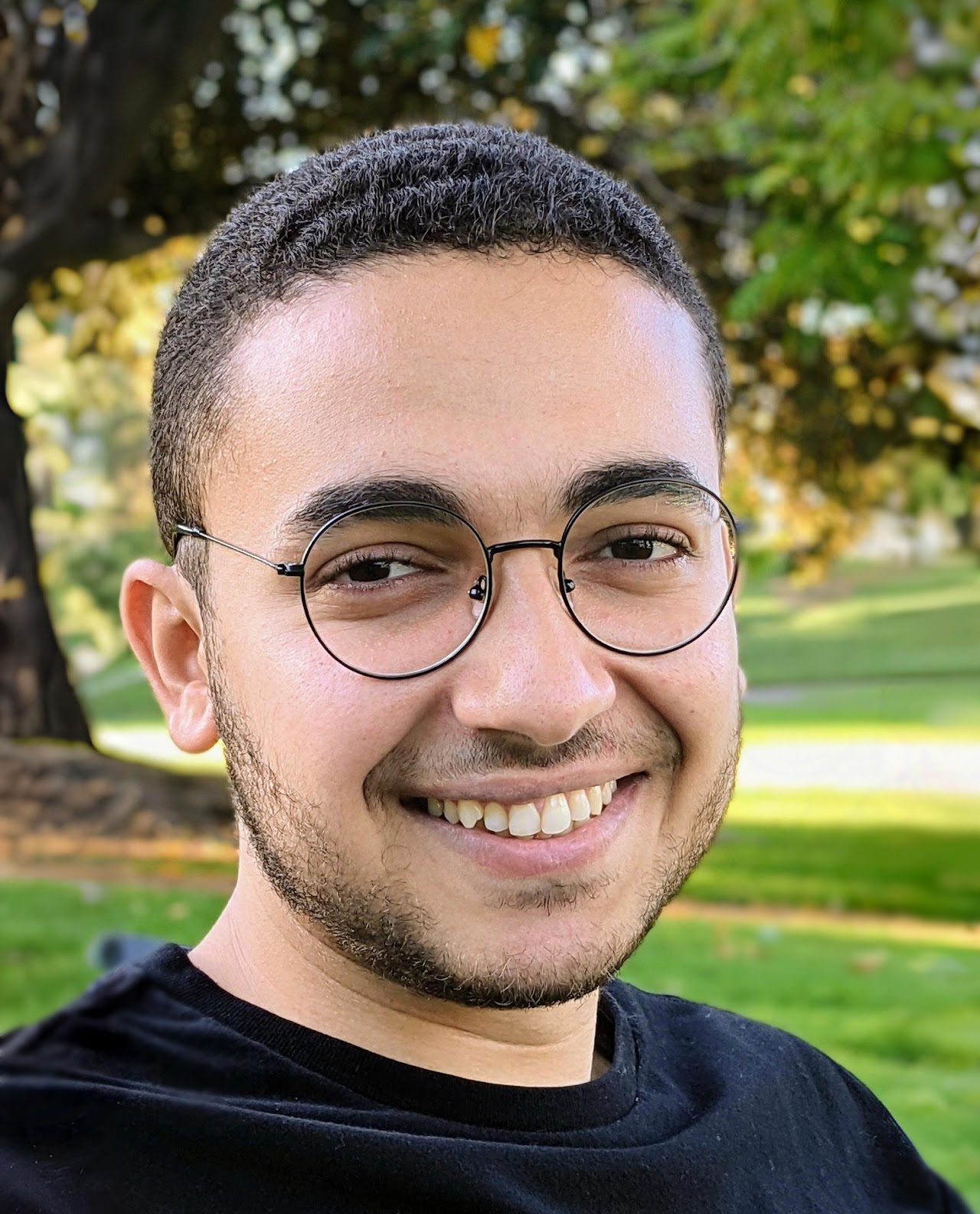
Speaker: Mahmoud Abdelgalil (University of California, San Diego)
Title: On some foundational issues in feedback control
Abstract: The remarkable success of closed-loop control in mitigating the effect of uncertainty on a system’s performance has undoubtedly enabled much of the technological world around us. Indeed, feedback regulation can be found “under the hood” in the functioning of engines, the workings of biological organisms, interplanetary navigation, GPS tracking, robotics and more. While the mitigation of uncertainty has been at the heart of control theory since its inception, explicit control of uncertainty is a relatively recent development that has garnered much attention. In this, a main object of study is the Liouville (continuity) equation -- the PDE governing the evolution of the probability distribution of the state of a dynamical system. While it was widely believed that the basic question of controllability of the Liouville equation had been resolved, it escaped the community’s attention for almost two decades that early investigations on the subject came short of providing a satisfactory answer, even for linear systems. In this talk, we revisit and address this topic and develop a theory for Collective Steering, the endeavor to shepherd an ensemble of dynamical systems between desired configurations using a common feedback law. Our investigation sheds light on a topological obstruction at the heart of the issue that limits the ability to design feedback control laws that are globally continuous with respect to the specifications. Along the way, we touch upon an elegant geometric framework at the intersection of optimal transport, geometric hydrodynamics, and quantum mechanics.
Host: Yuming Paul Zhang
ACM seminar’s website: https://sites.google.com/view/yzhangpaul/applied-and-computational-mathematics-seminars
DMS Applied and Computational Mathematics Seminar
Sep 05, 2025 02:00 PM
328 Parker Hall
Title: Exploiting Low-Dimensional Data Structures and Understanding Neural Scaling Laws of Transformers
Abstract: When training deep neural networks, a model’s generalization error is often observed to follow a power scaling law dependent on the model size and the data size. A prominent example is transformer-based large language models (LLMs), where networks with billions of parameters are trained on trillions of tokens. A theoretical interest in LLMs is to understand why transformer scaling laws emerge. In this talk, we exploit low-dimensional structures in language datasets by estimating its intrinsic dimension and establish statistical estimation and mathematical approximation theories for transformers to predict the scaling laws. This perspective shows that transformer scaling laws can be explained in a manner consistent with the underlying data geometry. We further validate our theory with empirical observations of LLMs and find strong agreement between the observed empirical scaling laws and our theoretical predictions. Finally, we turn to in-context learning, analyzing its scaling behavior by uncovering a connection between the attention mechanism in transformers and classical kernel methods in machine learning.
Host: Yimin Zhong
DMS Applied and Computational Mathematics Seminar
May 02, 2025 02:00 PM
328 Parker Hall
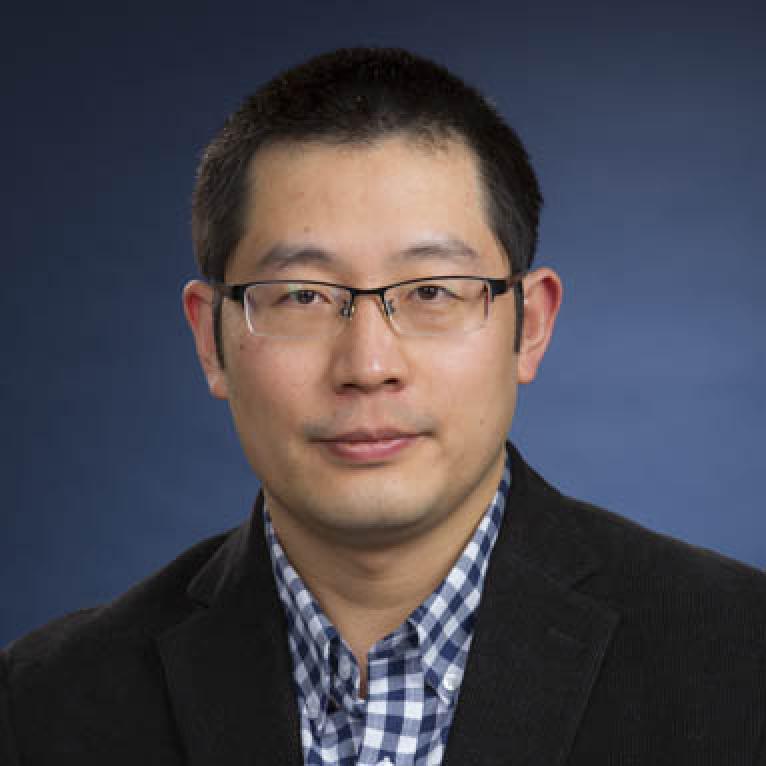
Speaker: Dr. Zhongqiang Zhang (Worcester Polytechnic Institute, Worcester Massachusetts)
Title: Solving Fokker-Planck Equations in High Dimensions Using Tensor Neural Networks
Abstract: We solve high-dimensional Fokker-Planck equations on the whole space by using tensor neural networks. The tensor neural networks consist of a sum of tensor products of one-dimensional feedforward networks or a linear combination of several selected radial basis functions. These networks allow us to exploit auto-differentiation in major Python packages efficiently. Furthermore, using radial basis functions can fully avoid auto-differentiation, which is very expensive in high dimensions. We then use the physics-informed neural networks and stochastic gradient descent methods to learn the tensor networks. One essential step is to determine a proper numerical support for the Fokker-Planck equation. We demonstrate numerically that the tensor neural networks in physics-informed machine learning are efficient for Fokker-Planck equations from two to ten dimensions.
More Events...