



AI Teaching and Learning at Auburn
The Biggio Center supports Auburn’s growing AI ecosystem by helping educators move from curiosity to confident, responsible practice. Our work focuses on practical teaching strategies, ethical decision-making, AI literacy, assessment design, student engagement, and workforce readiness.
We partner with faculty and academic units to explore how AI can support learning without losing sight of what matters most: critical thinking, human judgment, creativity, disciplinary expertise, and student success.
Whether you are just beginning to experiment with AI or redesigning a course, assignment, program, or professional development experience, the Biggio Center offers pathways to help you take the next step.
Practical. Ethical. Auburn-centered
AI is not just a technology issue. It is a teaching, learning, workforce, ethics, access, and leadership issue. The Biggio Center helps Auburn engage AI with both momentum and care.
Explore teaching strategies, assignment redesign ideas, syllabus language, and professional development opportunities for using AI in your courses.

Find guidance for using AI responsibly, building AI literacy, and understanding expectations in your courses.
Access AI learning experiences designed to help teachers understand and apply AI in age-appropriate, classroom-centered ways.
Discover resources for AI policy conversations, faculty development, workforce alignment, and responsible innovation.
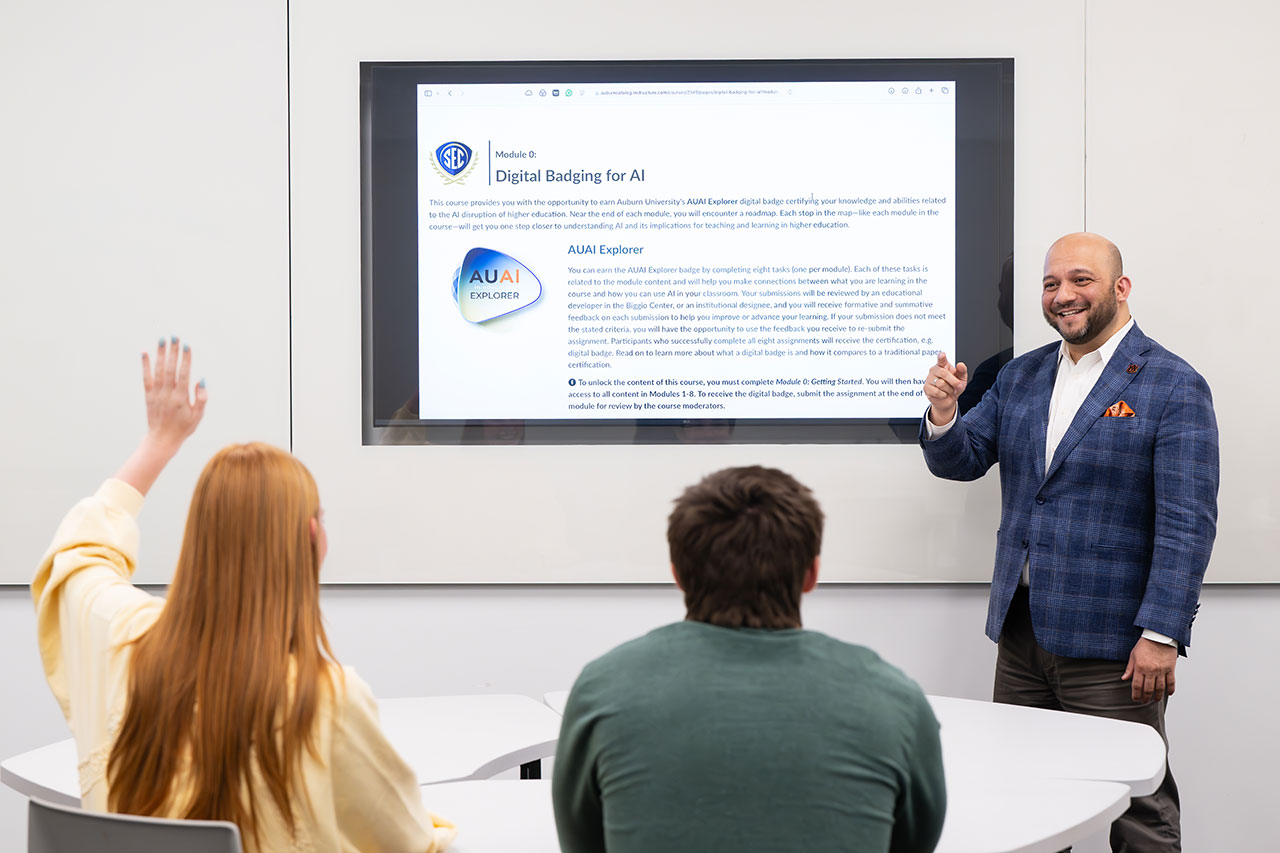
A self-paced course designed to help higher education faculty, graduate students, and professional staff understand generative AI and apply it thoughtfully in teaching and learning.
Sample syllabus statements that help instructors clarify when and how students may use generative AI tools in a course.
University guidance to help faculty, students, and staff understand appropriate, responsible, and secure uses of generative AI tools.
A guide to AI-supported research tools and considerations for using AI in academic inquiry.
Examples of Auburn faculty exploring AI in teaching, research, creative work, and student engagement.
A cross-campus group supporting AI education programs and resources for faculty, students, and staff.
AI Support by Need
I want to redesign an assignment
AI can raise real questions about academic integrity, originality, and assessment. The Biggio Center helps faculty rethink assignments so students demonstrate learning in ways that are transparent, meaningful, and aligned with course outcomes.
Helpful starting points: syllabus language, assignment redesign consultations, and Teaching with AI @ Auburn.
I want to help students use AI responsibly
Students need more than warnings. They need clear expectations, examples, and opportunities to practice responsible AI use. We help faculty frame AI as a tool for learning while reinforcing disciplinary judgment, citation expectations, and ethical use.
Helpful starting points: AI-enhanced learning guidance, course-level AI policies, and classroom discussion prompts.
I want to understand AI basics
For faculty, staff, and partners who are newer to AI, Biggio resources provide practical entry points without requiring technical expertise. The goal is confidence, not buzzword bingo.
Helpful starting points: Teaching with AI @ Auburn, AI events, and introductory workshops.
I want to plan AI professional development
Departments and colleges can work with the Biggio Center to design AI learning experiences for faculty, staff, or students. These may include workshops, facilitated discussions, course redesign sessions, or custom resource development.
Helpful starting points: request a consultation, explore upcoming events, and review available courses.
The Biggio Center’s AI work supports faculty development, student AI literacy, K–12 outreach, statewide collaboration, and national conversations about the future of education.
How to Get Started with AI in Your Course
Start with the learning problem, not the tool. What do you want students to understand, practice, create, evaluate, or explain?
Use Auburn’s AI guidance and syllabus language to clarify expectations for students and ensure tools are used responsibly.
Review the Teaching with AI course, AI showcase examples, and student-facing AI literacy materials.
Start small. Revise one assignment, discussion, project, or assessment before attempting a full course redesign.
Collect student feedback, evaluate the quality of learning, and continue refining your approach.
Upcoming AI Events
12:00 a.m.
